
The Feedback Loop Behind Every Successful AI System

The Feedback Loop Behind Every Successful AI System
The most reliable AI systems turn real-world failures into the fuel that drives the next iteration.
As AI moves into the real world, it is becoming increasingly clear that no training dataset can account for every situation a model would encounter. The AI feedback loop allows what happens after deployment to become part of the system's ongoing evolution, creating a cycle where each iteration can build on whatever came before it.
The strongest AI systems create a continuous loop between production behavior, human feedback, data refinement and model iteration. It is this cycle of learning and improvement that allows AI systems to evolve alongside the real world they operate in.
Executive Summary
- Production reveals what controlled evaluation cannot. Real-world use exposes edge cases, changing behaviour, and gaps in coverage that may not appear in existing datasets or pre-deployment testing.
- Feedback only becomes useful when it leads to action. User reports, model outputs, behavioural patterns, and human corrections need to be connected to the context that produced them so teams can investigate and prioritize meaningful failures.
- More data does not automatically mean better data. Production failures can help teams identify missing or underrepresented scenarios, allowing data collection and refinement to focus on improving coverage rather than simply increasing dataset size.
- Data refinement should target the weakness behind the failure. Missing examples may require targeted collection, while inconsistent labels or ambiguous annotation guidelines may require existing data and labeling practices to be revised.
- The loop closes through evaluation, not retraining alone. Important production failures can become evaluation cases for future iterations, while broader testing helps determine whether an improvement addressed the original weakness without introducing unacceptable regressions elsewhere.
When AI Models Meet Reality
Real-world failures can reveal edge cases, ambiguous instructions, missing coverage, and changes in user behaviour that may not appear in existing datasets.
Rao et al. (2026) note that pre-deployment evaluations are mostly conducted in controlled environments that cannot fully account for real-world dynamics, making post-deployment monitoring essential for identifying unforeseen outputs.
This also makes edge cases particularly important. A rare scenario may have little impact on benchmark scores, but becomes highly significant when it happens during production. For continuous learning AI systems, these moments are exactly what provides a view into how the model behaves beyond the conditions it was originally evaluated against.
From Feedback to Action
A Failure Is Only the Beginning
In production, an AI system generates a constant stream of signals that can reveal when it doesn’t behave according to expectations. These signals do not always come in the form of an obvious failure.
They can emerge through:
- User reports: Direct feedback from users about incorrect, unexpected, or unsatisfactory results
- Model outputs: Predictions or responses that reveal errors, inconsistencies, or unexpected behaviour
- Behavioural patterns: Changes in how users interact with the system
- Human corrections: Edits, overrides, or annotations made when users or reviewers correct the system
However, these signals have little value if they remain isolated from the systems and processes used to evaluate the AI.
The Problem With Scattered Signals
Data monitoring occurs at multiple points throughout an AI system, meaning the signals it generates are often scattered across different platforms and data sources.
Teams can struggle to distinguish separate incidents from recurring problems or determine which issues require attention first. NIST (2026) also confirms this by identifying fragmented logging across distributed infrastructure as one of the barriers to effective post-deployment AI monitoring.
These signals need to be structured and connected, so that they become much easier to analyze and prioritize.
The solution? Make the evidence traceable.
From Signals to Action
The goal of an AI feedback loop is to turn signals into decisions. Trying to collect every possible signal is a Sisyphean task. What matters is which signals lead to an action that improves the model.
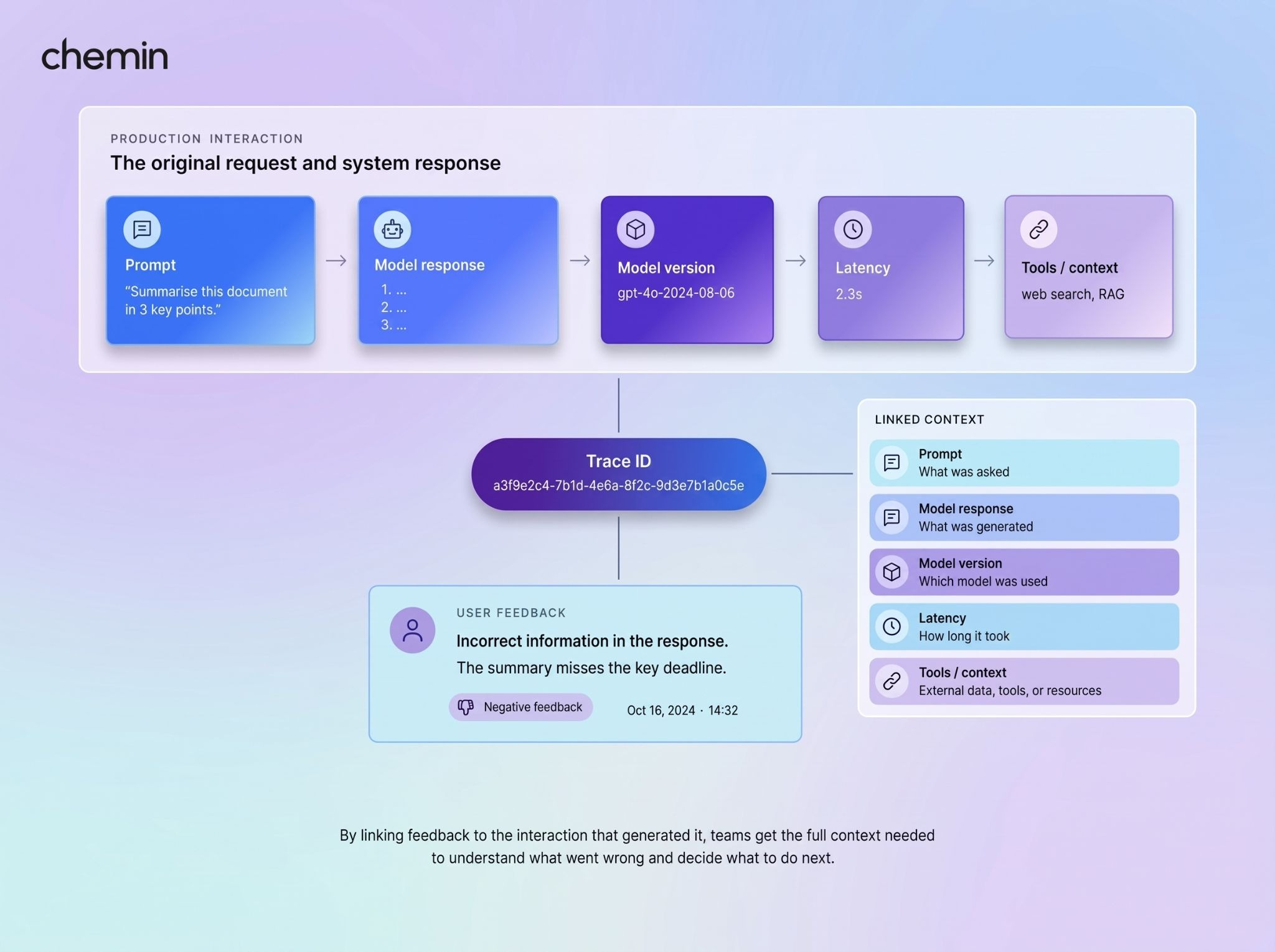
Fig 1: Linking Feedback to the Interaction That Generated It
AWS (2025) recommends structuring feedback so that it can be traced back to the interaction that generated it, connecting the feedback with information such as the model response, model version, prompt, or other relevant context.
This transforms feedback from a collection of disconnected signals into a structured operational process. The most valuable failures can be investigated, prioritised, then converted into evaluation cases that test whether future iterations have actually addressed the problem.
That is what makes a feedback loop operational. Every signal that is kept has a job: it points to something the team can investigate, fix or test.
From Failure to Better Data
More Data Isn't Always Better Data
When an AI system fails in production, the typical response is often to collect more data.
However, Kariluoto et al. (2021) found that increasing the number of data records did not immediately produce significant improvements in model performance in their experiments, highlighting the importance of data quality alongside quantity.
Other research also shows that simply adding more data can introduce new problems rather than solve existing ones. In a large-scale study (2023) across hospital chest X-ray datasets, Compton et al. found that adding data from another hospital reduced worst-group accuracy in 43% of their experimental settings, partly because the additional data introduced hospital-specific spurious correlations.
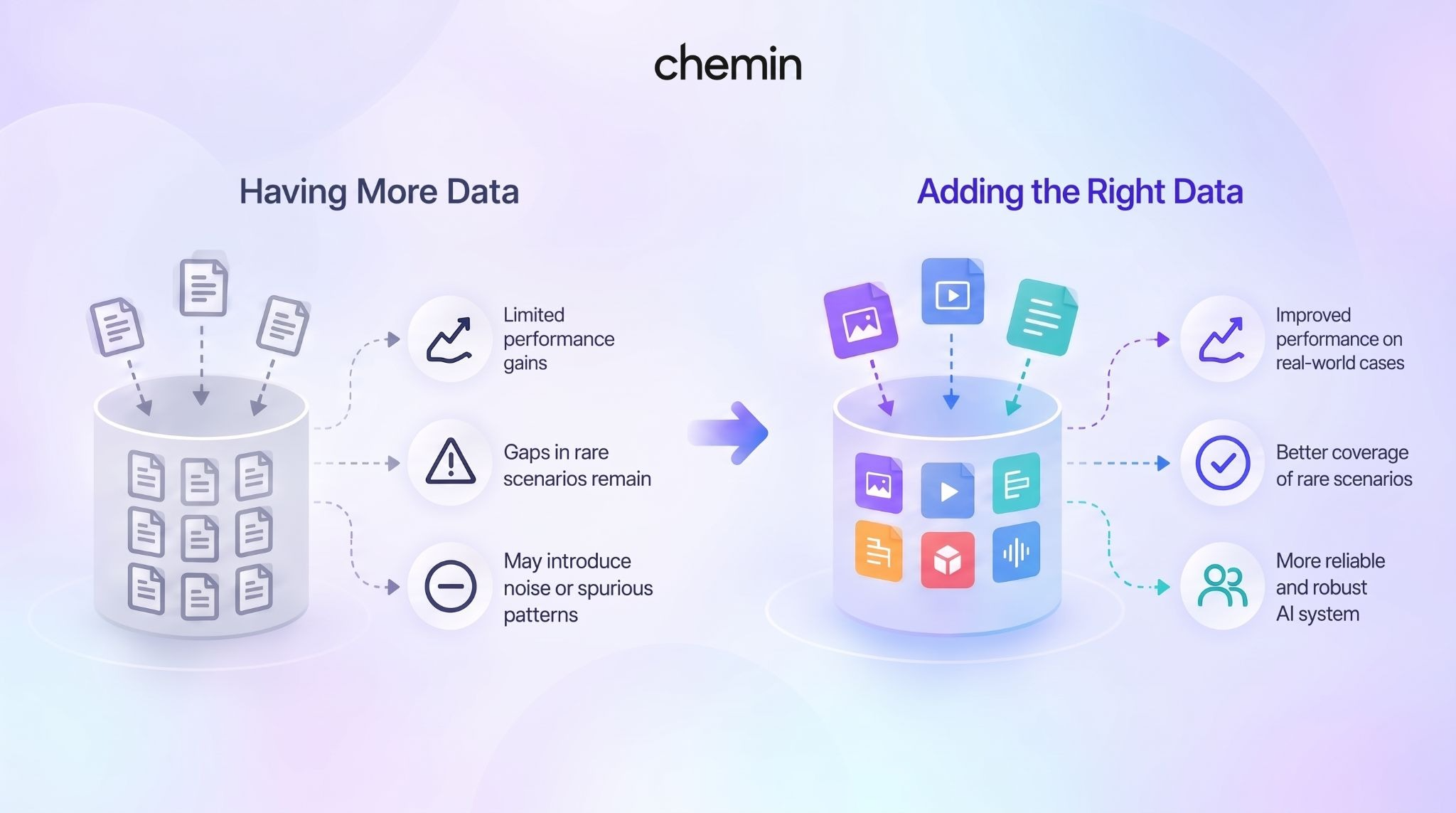
Fig 2: Having More Data vs Adding the Right Data
Hence, the quality of data far outweighs its quantity when it comes to operational relevance. The value of new data depends on what it adds to the dataset.
This is where rare scenario data collection becomes a key part of data refinement. Instead of simply increasing the volume of existing examples, teams can use production failures to identify situations that are missing or underrepresented, then deliberately collect data that improves coverage of those scenarios.
This way, the data becomes more representative of the situations the system needs to run reliably.
Finding the Data Gap
After failure has been identified, the next step is to determine what is missing, what the existing data failed to represent.
Common gaps include:
- Missing examples: The dataset contains little or no data representing the scenario in which the failure occurred.
- Inconsistent labels: Similar situations are labeled differently, giving the model conflicting signals during training or evaluation.
- Ambiguous annotation guidelines: The rules for labeling a scenario are unclear, causing annotators to interpret the same situation differently.
- Insufficient scenario coverage: The dataset does not adequately represent a particular environment, condition, or combination of factors.
- Insufficient complexity: The data may contain the right objects or concepts but fail to capture how they interact in more complex real-world situations.
Finding these gaps requires tracing the production failure back to the data that was used to train and evaluate the system. Teams can start by comparing the failed interaction with existing examples: Was this scenario represented? Was it labeled correctly? Did the annotations capture the relevant context?
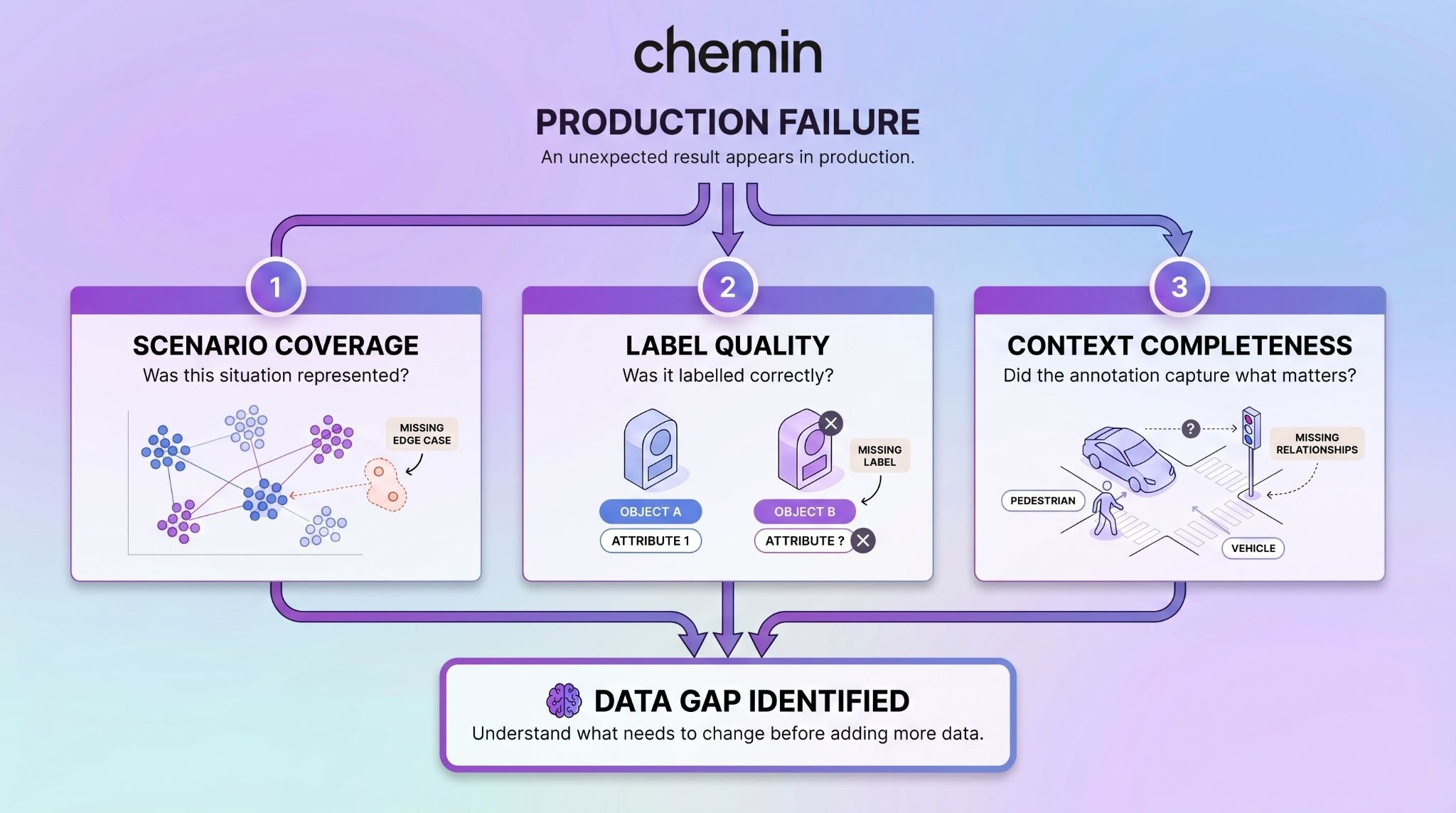
Fig 3: Three Questions to Find the Data Gap
From there, reviewing similar failures can reveal whether the problem is an outlier or part of a broader pattern.
If multiple failures share the same conditions, the issue may point to a specific gap in the dataset rather than a single missing example.
This process turns production feedback into a specific data question:
“What does the system need to learn or be tested on that it currently cannot handle reliably?”
Refining the Dataset
Once the data gap has been identified, the next step is to make a targeted change to the dataset rather than simply adding more examples.
The appropriate change depends on what caused the failure.
If a scenario is missing, teams may need to collect additional examples that represent the conditions seen in production.
If the problem comes from inconsistent labels, existing examples may need to be reviewed and relabeled. Annotation guidelines may need to be clarified before new data is added if annotators interpreted the same situation differently.
This makes data refinement and model iteration a targeted process. The end goal is to address the specific weakness exposed by production.
The refinement process therefore becomes:
1. Identify the failure
2. Identify the data gap
3. Make a targeted change
4. Validate the change.
This is what turns production feedback into an edge-case strategy for AI models. Instead of treating every failure as a reason to collect more data, teams can use failures to determine which data, labels, scenarios or guidelines need to change.
Measure the Next Iteration
A well-managed production failure can inevitably become an evaluation case. This gives teams a direct way to ask: Can the next iteration handle cases that previously caused it to fail?
Addressing the original failure, however, is only part of the evaluation. The new iteration should also be evaluated against a wider range of performance metrics to ensure that improving one scenario has not introduced problems elsewhere.
NIST recommends testing AI systems under conditions similar to their deployment environment and tracking measurable changes after the system is “updated”.
The result of that evaluation determines what happens next. If the change addresses the original weakness without unacceptable regressions, the new iteration can move forward. If it does not, the results become another signal for investigation and refinement.
At the end of the day, this is what closes the feedback loop: each iteration is evaluated, returned to production, and observed again as the system encounters new real-world conditions.

Fig. 4: The Continuous AI Feedback Loop
To put everything in a nutshell, the process sets the flywheel in motion by monitoring production behaviour and capturing feedback, giving teams signals about where the system succeeds or struggles.
Those signals can then be used to prioritize meaningful failures and identify gaps in the training data behind them.
Instead of responding by simply adding more data, teams can refine the dataset through targeted collection, cleaning, augmentation, or improved labeling before training and evaluating the next model version.
Once deployed, that new version outputs another generation of real-world evidence, restarting the cycle. In this way, continuous learning AI systems improve through an ongoing process of observing, learning, refining, then evaluating, turning production failures into actionable data for a structured and continuous model iteration.
What Changes When Teams Treat Feedback As Part of the AI System?
AI development becomes continuous. Deployment is no longer the finish line. Production behaviour becomes an input into evaluation and future iterations.
Data work becomes more targeted. Instead of treating dataset growth as the objective, teams can prioritize failures that reveal meaningful gaps and focus annotation and collection effort where it can have the greatest operational relevance.
Evaluation becomes connected to production. The failures that matter in the real world now become part of how future iterations are tested, creating continuity between what happens in production and what teams measure during development.
Turning the Feedback Loop Into a Design Habit
Building an effective feedback loop requires teams to make feedback part of how the system is designed, evaluated, and improved.
When done correctly, teams will no longer need to rely on the assumption that every production failure will trigger a new training cycle.
A few questions can help keep that process focused:
Can we trace a failure back to what happened?
Production feedback should retain enough context to understand the interaction, model behaviour, and conditions surrounding the failure.
Do we know what the failure actually reveals?
Before collecting more data, determine whether the problem comes from missing coverage, inconsistent labels, unclear annotation guidelines, or another part of the system.
Are we changing the right data?
Prioritize examples and scenarios that address observed weaknesses rather than increasing dataset volume for its own sake.
Can we test whether the change worked?
Important production failures should inform evaluation so that future iterations can be tested against the conditions that originally exposed the problem.
Are we still watching after deployment?
A successful iteration does not end the process. New users, environments, and behaviours can reveal weaknesses that previous evaluations did not capture.
Conclusion
The strongest AI systems are the ones designed to learn from what production failures reveal.
A rare scenario, incorrect output, or unexpected behaviour can expose something the system has not seen. What matters is what happens next.
“When those signals are prioritized and connected back to data and evaluation, the final stage of an AI pipeline will evolve and those very signals become a source of evidence for what the system needs to improve next.”
Chemin’s perspective is that data quality is not a one-time checkpoint. It is an operating system for continuous AI improvement, connecting what models encounter in production with the data and decisions required to make them more reliable.
That is the value of an AI feedback loop: creating a continuous connection between how an AI system behaves in the real world and how it evolves over time.
Want to build a data workflow that keeps your AI improving?
Discover more

GPT-4o-mini vs SEA-LIONv3: Bahasa Indonesia LLM Evaluation
A 50-task study tested Indonesian-specific prompts in English and Bahasa Indonesia to examine how model preferences varied across local-context tasks.
What Is Data Labeling? A Comprehensive Guide
Without properly labeled data, ML models struggle to understand key features, leading to unreliable results. This guide explores what data labeling is, how it works, different approaches, best practices, and its real-world applications.

SEA-LIONv3 vs SahabatAI-v1: Bahasa Indonesia LLM Evaluation
SEA-LIONv3 and SahabatAI-v1 were tested on 50 Indonesian-specific tasks to examine how model preferences changed across task categories and prompt languages.