
Lessons from Building AI Agents in Client-Critical Workflows
When AI Agents Take On Live Delivery
An internal multilingual rewriting project moved work that would traditionally require a large annotation team into an automated pipeline. The system processed extended conversations across multiple languages with minimal manual oversight.
This cut manual handling and increased the impact of repeated errors. A flawed instruction could affect a batch before manual review catches it.
The project tested how AI agent workflows hold up when client delivery depends on their output.
Executive Summary
- Moving repetitive processing into automation reduced the amount of manual work required for delivery.
- Higher processing volume increased the impact of recurring errors across a batch.
- The workflow needed controls at different stages rather than relying solely on final review.
- Production cases continued to shape the rules after the workflow went live.
What Higher Volume Exposes
Production AI agents face input variation that small-scale testing can miss.
The project processed long conversation histories with mixed-language inputs. Responses also varied in structure and clarity. One rewriting rule had to work across all of those conditions.
This variation made clear that processing and review rules were necessary before the workflow could handle higher volume.
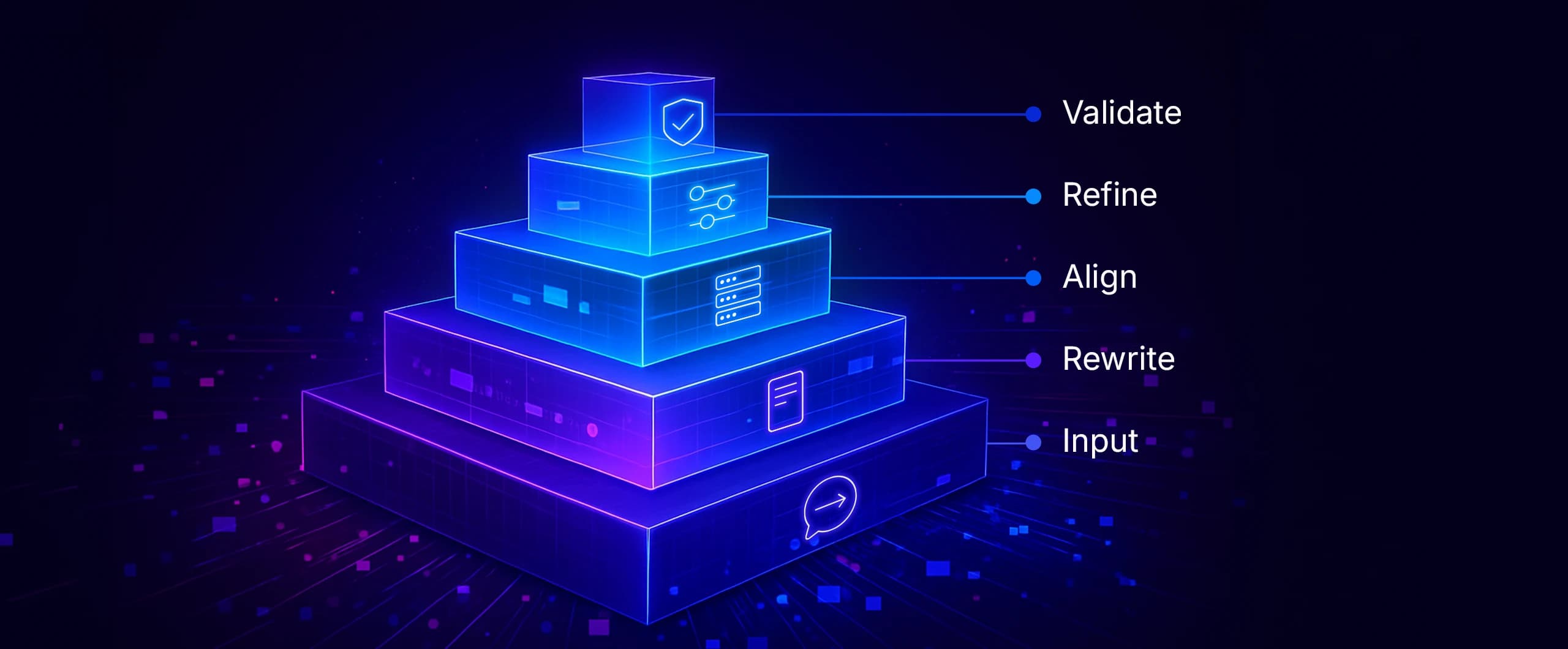
Figure 1. Anatomy of a production AI workflow

Multilingual inputs and cross-turn context introduce variation as entries move through the production workflow.
Key Insights From Building AI Agent Workflows
Break Complex Work Into Stages
One challenge when building AI agents for client delivery is deciding which responsibilities should remain separate.
The workflow separated 3 responsibilities:
- Rewriting produced the revised response.
- Reasoning alignment checked it against the conversation context.
- Refinement applied the final quality checks.
This gave reviewers a clear point to inspect when a recurring issue appeared.
Figure 2. Staged decision architecture

The workflow separates content generation from context checks and final review.
Catch Errors Before They Spread
The workflow treated AI agent validation as a series of checks rather than a final review.
- Rule-based validation: An automated script checked for defined structural deviations.
- Automated stop conditions: Processing stopped when a batch reached its error threshold.
- Stage-level checkpoints: Outputs were checked before moving to the next stage.
Validation detected known problems. Stop conditions halted affected batches. Checkpoints blocked failed outputs from moving downstream.
Set Rules for Ambiguous Cases
Structural checks couldn’t resolve every decision.
Long responses sometimes required factual corrections. Mixed-language content also needed rules for normalization and tone. Some cases required human review.
The workflow defined:
- acceptable output criteria for factual and linguistic quality;
- escalation thresholds for uncertain cases;
- edge-case rules for recurring input patterns.
These rules moved repeated decisions into the workflow. Reviewers only stepped in when an input fell outside the defined conditions.
Adjust Rules During Delivery
Live processing exposed cases that the initial rules didn’t cover.
New linguistic patterns led the team to refine validation rules. Early production results also showed that batch stop thresholds needed adjustment.
Some escalation triggers stopped processing unnecessarily. The team refined the rules while keeping uncertain cases under human review.
The workflow was version-controlled and reversible, so the team could test revised rules without rebuilding the pipeline.
Results From the Multilingual Workflow
Measure | Reported result |
Manual handling time per entry | ~97% reduction, from ~15 minutes to ~30 seconds |
Delivery time | Under 7 days |
Processing capacity | 10× increase without additional overhead |
Expert Perspective: Turning Delivery Requirements Into System Logic
Delivery Project Manager Aisyah worked across project delivery and workflow design. She translated client requirements into rules that the automated pipeline could execute.
Here, system logic refers to the rules and escalation conditions that govern how the workflow handles each decision.
“Delivery isn't one task; it's a chain of decisions. Trying to cram all that context into one system made debugging impossible, and quality suffered. Decomposing the work into smaller, explicit steps made the system more controllable.”
Her role required identifying where human judgment still mattered and where a decision could be encoded into the workflow.
Aisyah described the cost of leaving those decisions unclear:
“In live delivery, near-correct is still broken. Anything ambiguous becomes expensive once you multiply it across thousands of tasks.”
Delivery requirements were incorporated into the workflow design throughout the project.
Business Implications for Client-Critical AI
Failed Batches Create Recovery Cost
For production AI agents, repeated failures may require rollback and revalidation before delivery can continue. Processing speed should be evaluated alongside the time and effort required to recover from a failed batch.
Keep a Record of Production Changes
Prompts, validation rules, and stop conditions can change during live delivery. Each production version should record which rules were active. This makes failures easier to investigate and revisions easier to compare.
Production Changes Need Accountability
Changes to prompts, thresholds, and validation rules can alter how future batches are processed. Client-critical workflows need a clear record of who approved each production change and why it was made.
Recommendations for Building Client-Critical AI Agent Workflows
1. Map Failure Modes Before Launch
List the failures that matter most in delivery. Separate single-entry errors from failures that could affect a full batch. Rank them by client impact and recovery effort so the team knows which failures need the strongest controls before launch.
2. Use Real Failures as Release Tests
Keep cases that previously failed validation or required escalation. Run them again before approving a new prompt or rule. A revision should fix the known problem without creating another one.
3. Control Who Can Change Production Logic
Define who can approve changes to prompts, thresholds, and validation rules. This keeps production behavior traceable and prevents unreviewed changes from affecting client delivery.
4. Increase Volume Only When Recovery Is Predictable
Measure how quickly the team can detect a failed batch and restore the workflow. Increase processing volume only after recovery is understood and can be repeated.
From Automated Processing to Workflow Control
The multilingual rewriting project shifted, where the team focused its efforts.
Automation handled more of the repetitive execution. The delivery team focused on workflow rules and production exceptions.
Higher-volume AI delivery requires teams to understand how the workflow behaves under failure conditions. They need clear controls to detect problems and make production changes safely.
For enterprises, those controls create accountability during live delivery and provide a practical basis for increasing volume.
Find the failure points before production
Discover more

GPT-4o-mini vs SEA-LIONv3: Bahasa Indonesia LLM Evaluation
A 50-task study tested Indonesian-specific prompts in English and Bahasa Indonesia to examine how model preferences varied across local-context tasks.
What Is Data Labeling? A Comprehensive Guide
Without properly labeled data, ML models struggle to understand key features, leading to unreliable results. This guide explores what data labeling is, how it works, different approaches, best practices, and its real-world applications.

SEA-LIONv3 vs SahabatAI-v1: Bahasa Indonesia LLM Evaluation
SEA-LIONv3 and SahabatAI-v1 were tested on 50 Indonesian-specific tasks to examine how model preferences changed across task categories and prompt languages.