
Achieving Frame-Level Precision in Video Annotation
48 hrs
first batch turnaround
3
annotation layers synchronized
45
average action segments per clip

USE CASE
Video Annotation | Temporal Action Segmentation | Frame-Level Labeling

INDUSTRY
Generative AI | Computer Vision

SOLUTION
Data Annotation
The mission: Build structured training data from continuous video
A generative AI company needed video annotation to convert continuous video into structured training data for model development. Consistent segmentation ensured similar scenarios were interpreted the same way throughout the dataset.
The work: Dividing continuous video into action segments
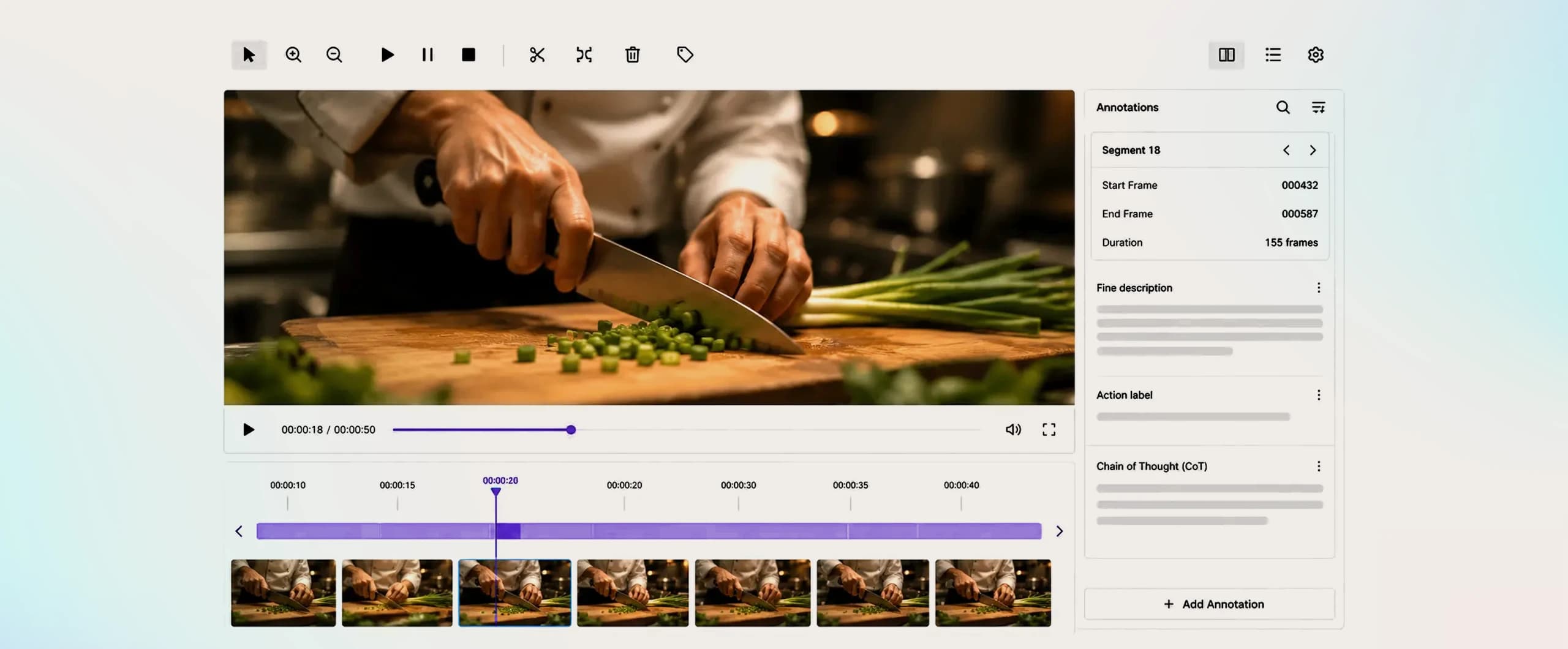
Frame-level video annotation, recreated for illustration.

Each action segment is paired with structured annotations that describe, label, and explain the selected time interval.
Each video was divided into action segments using temporal segmentation, the process of identifying the exact frame where one segment ended and the next began. A typical 50-second video contained around 45 segments, requiring segmentation decisions roughly every 1.1 seconds.
Each segment contained three synchronized annotation layers:
- Fine description: A detailed description of what occurs within the segment.
- Action label: A single label identifying the primary task being performed.
- Chain of Thought (CoT): A structured explanation describing why the segment started and ended at those specific frames.
A coarse annotation was also assigned to each segment, summarizing the entire action from its start to its end, ensuring the full duration of the activity was captured.
Together, these layers ensured the same annotation decisions were applied consistently across the dataset. In practice, that meant the reasoning applied to segment 40 of clip 500 matched the reasoning applied to a similar segment 3 of clip 1.
Temporal segmentation required the greatest judgment. Continuous movements and subtle transitions made it harder to define consistent action boundaries.
The challenge: Frame precision and consistency
We prioritized establishing a consistent annotation approach before optimizing speed. Early batches took longer because the team aligned on how to apply the client's guidelines rather than cutting corners. Once those decisions were aligned, annotation speed stabilized.
Key pressure points:
- Boundary interpretation: Small transitions between segments made it difficult to determine exactly where one segment ended and the next began.
- Layer alignment: Fine descriptions, action labels, and Chain of Thought (CoT) explanations are all needed to describe the same segment over the same frame range.
- Continuous timelines: Every segment had to connect seamlessly to the next, leaving no gaps or overlaps.
- Interpretation consistency: Small differences among annotators can lead to inconsistent results without shared annotation standards.
The delivery system: Building a shared annotation approach
Chemin’s approach prioritizes annotation decisions before scaling annotation volume. Every annotation depends on a shared understanding of how the segment should be interpreted.
- Start with a pilot: Validate segmentation decisions on a small batch.
- Document edge cases: Record boundary rules and ambiguous scenarios for consistent interpretation.
- Review feedback together: Refine segmentation rules before the next batch.
- Scale after alignment: Increase throughput once annotation decisions become consistent across reviewers.
The results: A delivery workflow built inside a 48-hour window
This was a new task type for the team, and the client required the first batch within 48 hours. That constraint shaped how we built the workflow. Annotation decisions were aligned early, edge cases were documented as they emerged, and every review cycle strengthened the consistency of the next batch.
The project established a repeatable operating model for a new video annotation workflow. Enterprise teams can introduce new annotation requirements without having to rebuild quality standards from scratch.
Designed for the complexity of video annotation
We establish consistent annotation standards from the first pilot batch, creating a foundation that scales across future datasets.
More stories
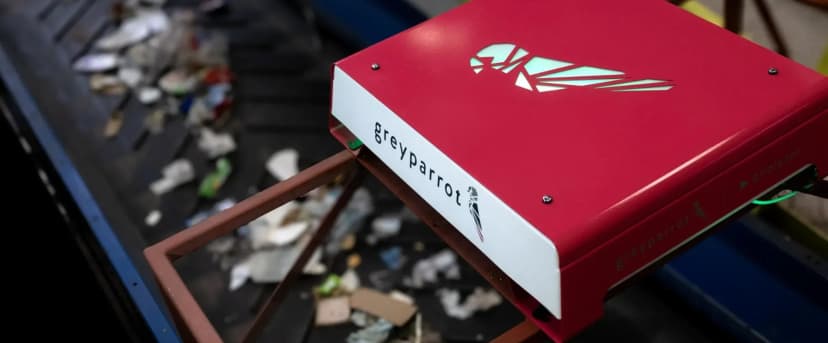
Turning mission-critical data into waste intelligence
Accelerated waste recognition AI by delivering 1 million high-accuracy, compliance-ready annotations monthly through expert-driven workflows and rapid data turnaround.

Audio AI Annotation for a Premier Gaming Studio: Scaled Output by 294%
Prepared 629.5 hours of conversational audio in 30 days while maintaining 99% accuracy and zero rework.
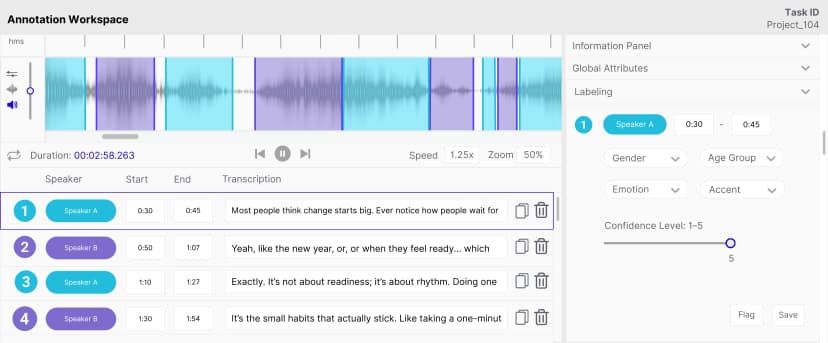
Gaming Audio Annotation: Structuring Speech Cues at 95%+ Accuracy
Turned emotion, accent, demographic, and speech cues into structured training data for adaptive game AI.